
After visiting Taiwan and researching Chinese material religion, I somehow captured the reverberations of Guanyin and the Buddha: I wanted to understand who had hollowed them and why. As the documentation did not enable me to initiate provenance research, I sought to understand the religious significance of hollowed statues and how a museum collection should account for and treat them. My understanding was nurtured by both a critical reading of Xaverian missionaries and Hackmann’s writings, as well as ethnographic fieldwork on deconsecration practices in contemporary Taiwan.
*Click on the first image to open the photo gallery and read the captions.
Xaverian missionaries and Heinrich Hackmann were prolific writers. The first compiled a newspaper—called Fede e Civiltà (Faith and Civilization)—for a lay audience, where missionaries’ letters and stories were reworked to describe their life and preaching in China.
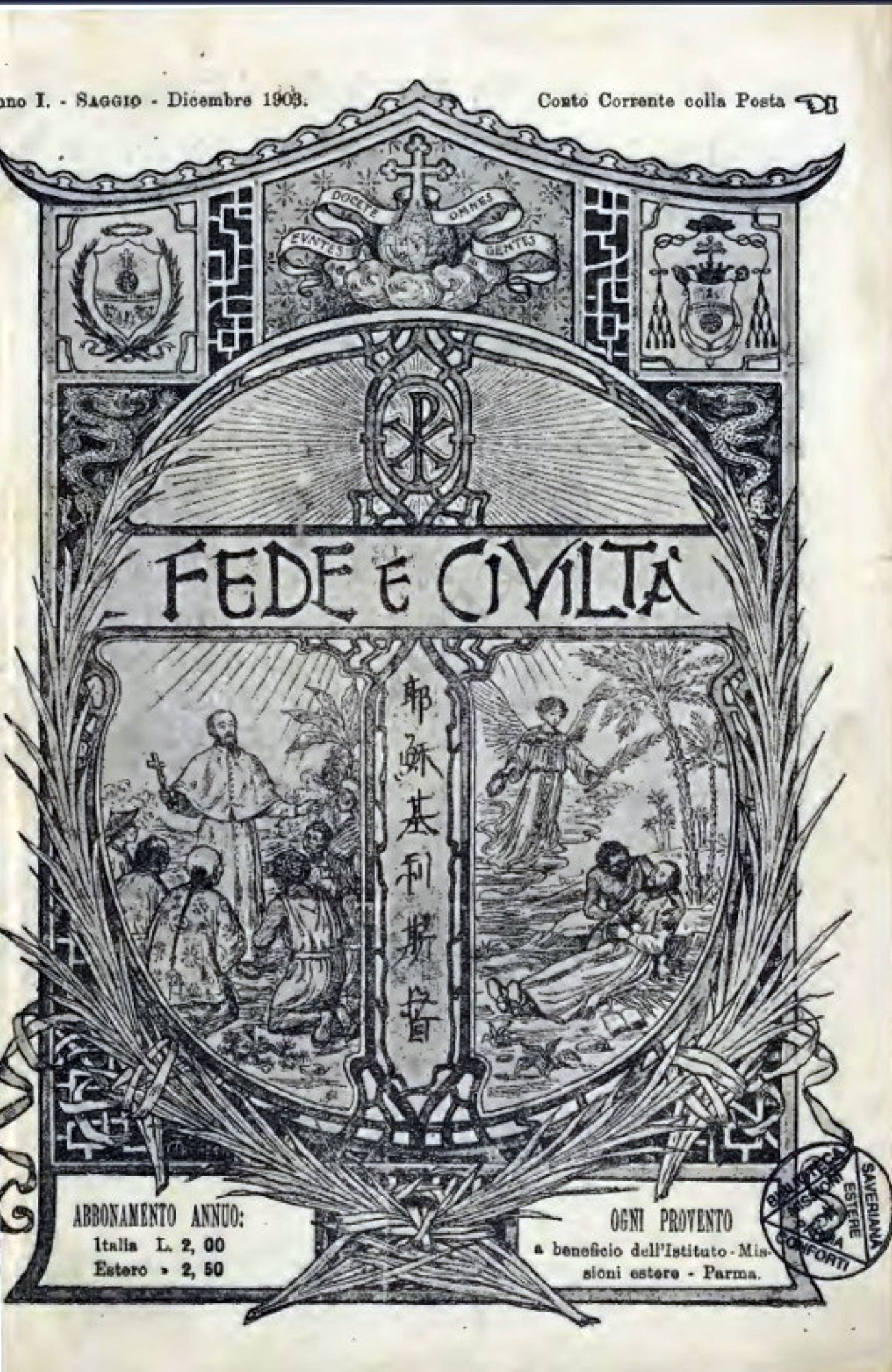

Along with these writings, some of them, like Silvestri (1972-1955) and Eugenio Pelerzi (1881-1942), wrote novels and theatrical pieces. Where did historical facts lie? Chinese folk believers were described as envious, pragmatic, and greedy, whereas their gods were depicted as ugly monsters, but nonetheless, not as powerful as the Christian God.
The second assembled photos, flowers, calligraphy, and temple prints within his diaries. It was as if he wanted to account for his full experience in knowing and understanding Chinese religion.


The materiality presence of these traces certifies his presence—we also have a list of the temples he visited.
However, in reading his descriptions, we still wonder where his biases and projections were residing
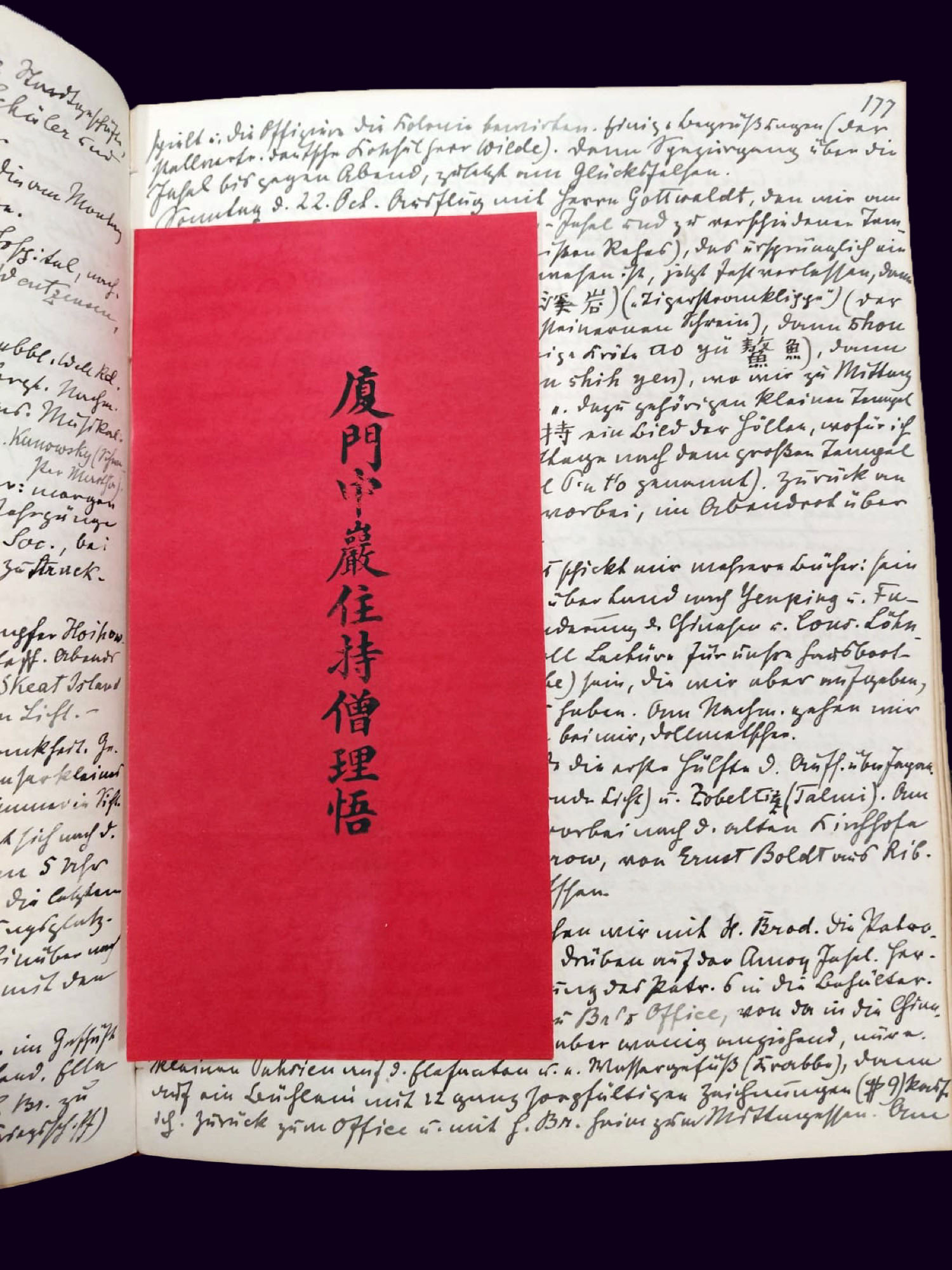

Both used drawings to illustrate their narrative, to provide a clearer explanation of their descriptions that was not directly available through pictures, or to epitomize key scenes described in their novels and accounts. Consequently, their drawings were never neutral, just as their writings were.
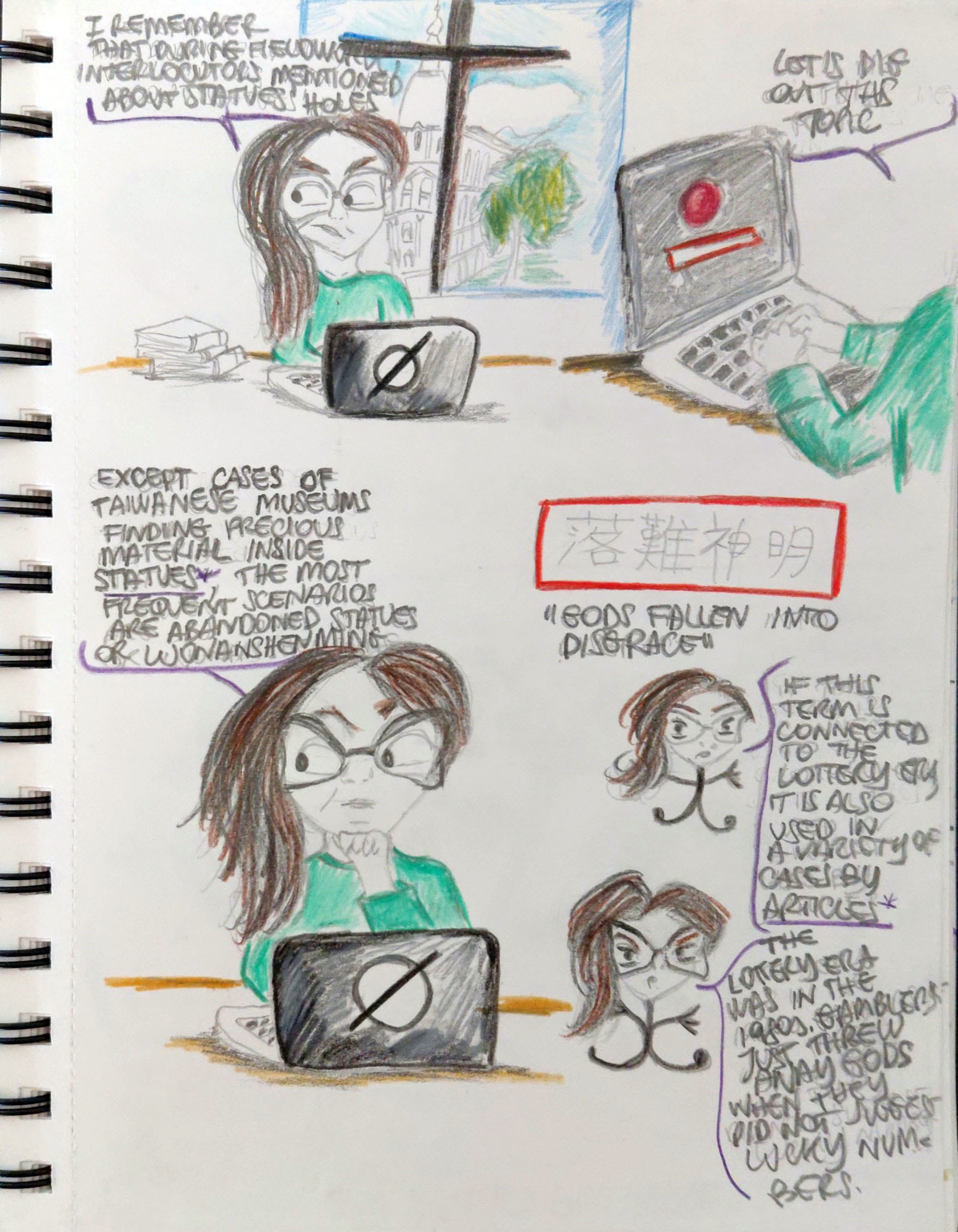
My experience with Chinese folk religion is also a result of my travels, experiences, and annotations. In reassessing the latter for this exhibition, I want to reverse the function and meaning played by missionaries’ fieldnotes in shaping the museum narrative about the Guanyin and the Buddha: my annotations do not state any “truth” or authority, but my own perspectives on contemporary practices of hollowing and my doubts in studying and understanding them. I want to emphasise my narrative as a personal perspective on a broader theme by utilising drawings. In contrast to Hackmann and Xaverian missionaries, I would like to clarify to the audience that my drawings are not “accurate photographs” of such a broad and sensitive theme as deconsecration rituals. This exhibition represents an element of a broader investigation to which local practitioners must have the last word. This exhibition is, therefore, a work in progress that should be enriched with future collaborations with Daoist specialists and worshippers. Let the audience imagine me at the beginning of this research.
“I remember that during fieldwork interlocutors mentioned about the statues’ holes.” “Let’s dig out this topic.” “Except cases of Taiwanese museums finding precious material inside statues, the most frequent scenarios are abandoned statues or luonanshenming” Luonanshenming (落難神明) “gods fallen into disgrace” “If this term is connected to the Lottery Era, it is also used in a variety of cases by articles.” “The Lottery Era was in the 1980s. Gamblers just threw away gods when they did not suggest lucky numbers.”
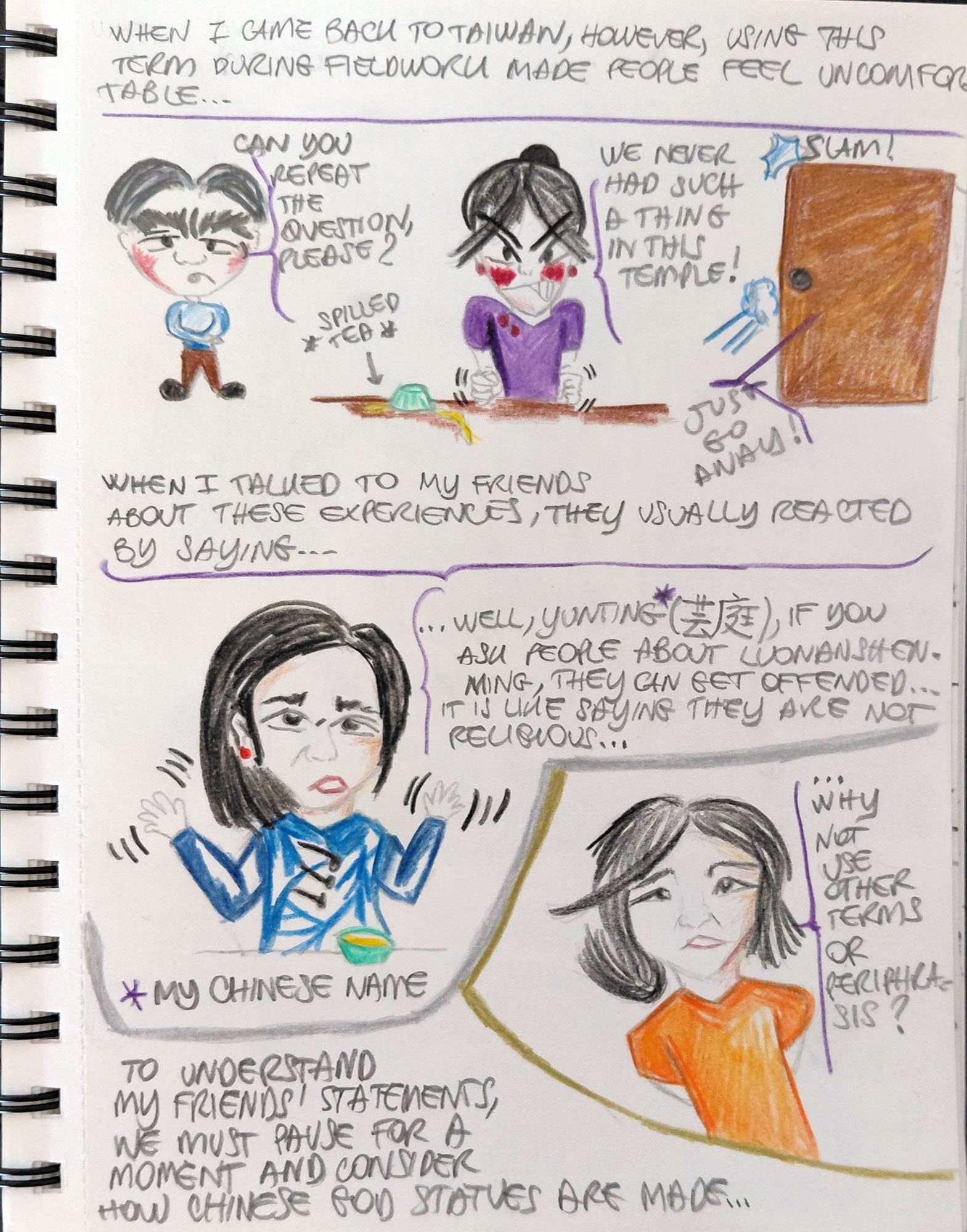
When I came back to Taiwan, however, using this term during fieldwork made people feel uncomfortable… “Can you repeat the question, please?” “We never had such a thing in this temple!” “Just go away!” When I talked to my friends about these experiences, they usually reacted by saying… “…Well, Yunting (芸庭, my Chinese name), if you ask people about luonanshenming, they can get offended… It is like saying they are not religious…” “…Why not use other terms or periphrasis?” To understand my friends’ statements, we must pause for a moment and consider how Chinese god statues are made…